California Could Use Some Allegedly “Zany Ideas”
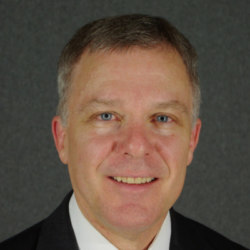
Veteran political strategist Garry South has just published a guest commentary in the San Francisco Chronicle in which he asks the question, “Is Steve Hilton a serious candidate?” South then launches a series of attacks to make clear he doesn’t think Hilton is gubernatorial material. But only a serious contender could have survived California’s so-called “jungle primary,” where voters choose among all candidates regardless of party affiliation. In a field of 61 candidates, Hilton came in second to Democrat Xavier Becerra. These top-two finishers will now face each other in the state’s general election this November.
There’s nothing unique about South attacking Hilton in a guest column. Politics is a dirty business, where tone is more potent than truth and emotion more effective than evidence. Quoting biased sources who were critical of Hilton’s proposals while active in politics in the U.K., South tags Hilton as a “gadfly,” a “wacky thinker” with “zany ideas.” But this hatchet job on Hilton is notable for how completely it inverts reality.
The irony would be hilarious if it weren’t so indicative of a systemic failure for which California’s entire ruling political establishment, certainly including Garry South, pretends to be in complete denial. South was campaign manager for Gray Davis’s successful campaigns for lieutenant governor in 1994, then for governor in 1998, and for reelection as governor in 2002. Which is to say that Garry South played a vital role in realigning California from a reliably red state to the deepest blue state in America.
The result is California today, a state where “wacky thinkers” with “zany ideas” are given free rein, and the only beneficiaries are special interests.
Meanwhile, the rest of us in California suffer the consequences of zany ideas gone mainstream. The list is obvious and lengthy. Every item on this list is, to put it charitably, an unforgivable lapse of judgment.
When it comes to helping the homeless in California, instead of recognizing that most homeless individuals suffer from mental illness, drug addiction, and alcoholism, state and local authorities treat it as a result of the housing shortage. The solution should be to round these folks up and get them into cost-effective congregate shelters where they can get help to overcome these disorders. Instead, billions of dollars are turned over to what has become an industry devoted to perpetuating the problem. These include “safe spaces” where drug addicts are provided needles and meth pipes, and “permanent supportive housing,” taxpayer-funded at $800,000 per unit (or more), where only a small fraction of the state’s nearly 200,000 homeless individuals will ever get a roof over their heads.
Which brings us to California’s housing shortage, which is erroneously blamed for the explosion in homelessness, while actually being explicitly responsible for California having the least affordable housing in the nation. The solution should be to scrap unreasonable environmental mandates on everything from what land can be developed to excessive building codes and streamline permitting requirements. This would enable private developers to make a profit without subsidies, while building homes that working people can afford to purchase. But that makes too much sense. Instead, the state piles more regulations onto developers, leaving only a handful of politically connected, taxpayer-subsidized mega-firms to build limited quantities of new housing, all of it crammed into California’s already crowded urban areas, all of it exorbitantly priced.
Environmentalism is not just a moral masquerade for an engineered housing shortage that has excluded a generation of Californians from owning a home or paying an affordable rent. It’s stopped all rational development in its tracks. The biggest example of this is California’s obsession with “net-zero” at all costs. The policies attendant to “net-zero” have done nothing to alleviate the “climate crisis,” if it even is a crisis. But they’ve given Californians among the most expensive gasoline, natural gas, and electricity rates in America. The regulatory war on California’s oil and gas industry has forced production offshore—Californians now import 75 percent of their petroleum and 90 percent of their natural gas. Never mind the lost jobs or the fact that California’s environmental regulations, even if softened to reasonable standards, still would result in the cleanest oil extraction and refining processes on Earth. Nope. Export the jobs, export the impact. The hypocrisy is stunning.
And then there’s water. In a state where over the past 50 years the population has doubled, and the inflation-adjusted value of California’s farm produce has also doubled, total urban water consumption is nearly the same today as it was in 1985, and total farm water consumption hasn’t changed since 1967. And yet California’s policymakers are determined to impose strict rationing on residential water use and force nearly a million acres of irrigated farmland out of production. Never mind that the state’s residents and farmers have done an extraordinary job conserving water; it’s time to squeeze more out of everyone. The solution would be to invest in practical water supply infrastructure, a solution even Democrats understood and implemented back in the 1950s and 1960s. But not today. Restrict. Ration. Charge everyone more, and only the bureaucrats and biggest corporations prosper from this misanthropy.
In California, of course, it isn’t just the housing, energy, or agricultural industries where only the biggest corporate players survive, and only then with subsidies and political connections. It’s every business. In a 2024 report published by Hilton himself in collaboration with the California Policy Center (disclaimer: I helped write this report), evidence was presented that California has the nation’s highest unemployment, lowest job growth, lowest income growth, and was ranked by Chief Executive magazine as the worst state in America to do business for the 10th year in a row.
Stupid, failing policies define California. A high-speed rail system that almost nobody will ever ride, now estimated to cost over $200 billion. A proposal to deploy floating offshore wind turbines, an absurdly expensive way to generate electricity that will wreak havoc on the environment. A justice system so compromised that even though 70 percent of Californians overwhelmingly approved a ballot initiative in 2024 to reestablish the idea that crimes are illegal, the Democrats running the state refuse to enforce it. A system of public education that puts more classroom emphasis on leftist indoctrination than on teaching basic skills.
In a state this determined to shortchange its citizens in favor of politically connected corporations, public sector unions, tribes, trial lawyers, environmentalist extremists, wildly profitable “nonprofits,” and useful leftist lunatics programmed to accept anything as long as it’s done in the name of social justice or fighting the climate emergency, “wacky” and “zany” are not terms appropriate to sling at the opposition. They define the status quo.
This article originally appeared in American Greatness.
Edward Ring is the director of water and energy policy for the California Policy Center, which he co-founded in 2013. Ring is the author of several books, including The Abundance Choice – Our Fight for More Water in California (2022), and The Analyst’s Cookbook: Making the Case for Abundance Using Numbers (2026).