Center for Public Accountability

The Center for Public Accountability promotes fiscal transparency and sustainability by providing financial data and analysis of California’s cities, counties and school districts, and offers a roadmap to sound governance for California’s local elected officials.

Resources

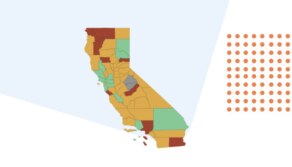
Tracks the financial health of California cities, counties and school districts. The interactive database allows users to track how elected officials are managing local budgets, support ongoing budget decision making and identify financial red flags. CPC’s dashboard uses public data from Annual Comprehensive Financial Reports (ACFR) that local governments are required to submit every year to get access to federal funds. The dashboard provides key financial metrics to allow local elected officials, analysts, reporters and citizens to understand how cities are performing overall and in comparison to other cities, and spotlight concerning financial trends.

Former California State Senator John Moorlach’s financial ranking report card provides rankings on how residents of across California are impacted by the financial standing of their cities, counties, and school districts. This is derived by dividing a city’s unrestricted net position  which reflects the available resources that the city can use for general purposes, such as public services, operations, and includes assets and liabilities  by their population. In addition, Moorlach also provides rankings on all 50 states.

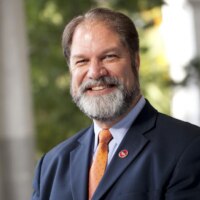
John Moorlach

Senior Fellow & Director, Center for Public Accountability 

As a Certified Public Accountant and Certified Financial Planner, John Moorlach began his career in public service 20 years ago when he warned that then Orange County Treasurer-Tax Collector Robert Citron’s risky investment strategies would lead to bankruptcy. Moorlach’s warnings proved true when Orange County filed for bankruptcy protection in December 1994, then the largest municipal bankruptcy in U.S. history. He was appointed the county Treasurer-Tax Collector in 1995 and was twice re-elected. In 2006, voters elected John to serve in his first of two terms on the Board of Supervisors, where he continued his focus on reforming the county’s budget practices and sounding the alarm on the county’s growing unfunded liabilities. He served from 2015 to 2020 as the State senator for the 37th Senate district. He is now a senior fellow and director of CPC’s Center for Public Accountability.
marc-joffe-cropped

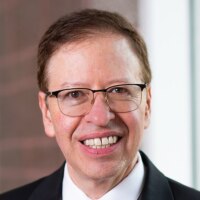
Marc Joffe

Senior Fellow, CPC Center for Public Accountability

Marc Joffe is President of the Contra Costa Taxpayers Association and a California Policy Center visiting fellow.

After a long career in the financial industry, including a senior director role at Moody’s Analytics, he transitioned to policy research at CPC and Reason Foundation. Joffe’s research focuses on government finance and state policy issues.

Marc earned an MBA from New York University and an MPA from San Francisco State University.

MarkMoses

Mark Moses

Senior Fellow, CPC Center for Public Accountability

Mark Moses has thirty years of experience in local government administration and finance. His recent book, The Municipal Financial Crisis – A Framework for Understanding and Fixing Government Budgeting (Palgrave Macmillan, January 2022).

Articles

 
default

California’s High-Speed Rail: The 2026 Draft Business Plan Is Ambitious, Expensive, and Still Legally Problematic

The California High-Speed Rail Authority released its 2026 Draft Business Plan on February 28, two years after the prior plan and in a radically different environment than when that last plan was written. While quite detailed, the new plan raises serious questions that the Authority has not fully answered: about costs that keep growing, about…

hsr_crossroads

California High-Speed Rail at a Crossroads

California’s high-speed rail project has never lacked for drama, but the challenges converging on the California High-Speed Rail Authority in early 2026 represent something qualitatively different from the delays, cost overruns, and political skirmishes that have defined the project for the better part of two decades. The Authority now faces a reckoning that is simultaneously…

ChatGPT Image Feb 12, 2026, 07_26_09 PM

California’s healthcare industrial complex is booming. Guess who’s paying?

California’s hospitals recorded $11.3 billion in total net income in 2024 — 10% above pre-pandemic levels. The average hospital CEO in the state earns roughly $920,000 a year. And the largest union representing healthcare workers collected $114.5 million in dues in 2024 alone, according to its federal LM-2 filing — spending just 16 cents of…