Los Angeles Should Follow San Francisco’s Path to Recovery — Says Man Who Helped Set Back Both
A former aide who served and defended two disastrous DAs now offers advice on urban governance.
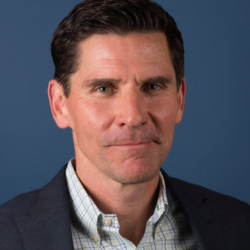
Alex Bastian has lived and worked in California’s two most important cities, and he has advice for Los Angeles: Be more like San Francisco.
San Francisco “is my hometown,” he wrote recently in The Hill, while Los Angeles “has been my home for many chapters of my life.” However, he observed, “they seem to be moving in different directions.”
Just a few years ago, “San Francisco had become the national symbol of urban decline.” Today, its “cleaner streets, new investment and improving economic indicators” reflect a rejection of “ideological purity.” Los Angeles, by contrast, “is exactly where San Francisco found itself only a few years ago.”
“San Francisco’s progress,” he writes, “offers a roadmap for Los Angeles.”
It’s not until the tagline that you discover Bastian is no neutral observer. He’s president and CEO of the Hotel Council of San Francisco. But he is more than a paid cheerleader for Bay Area hotels — and far too modest when he says that he merely lived and worked in California’s two greatest cities.
In San Francisco and Los Angeles, Bastian was a high-profile government official who promoted the disastrous public-safety policies that have driven the decline of both.
Born and raised in San Francisco, Bastian went south to UCLA, then north to the University of San Francisco for law school. He joined San Francisco DA Kamala Harris in 2010, rising under her successor, George Gascón, to communications director and deputy chief of staff. When Gascón left for Los Angeles in 2019, Bastian remained to serve San Francisco’s new DA, Chesa Boudin — briefly. In 2021, with Boudin facing recall, Bastian followed Gascón to the Los Angeles DA’s office. Then, as Gascón’s tenure unraveled, Bastian returned north to run San Francisco’s Hotel Council.
Through it all, Bastian defended Gascón and Boudin, leaders of the progressive-prosecutor movement who presided over rising crime and disorder — from organized retail theft and open-air drug markets to attacks on elderly Asian Americans.
Gascón took his philosophy statewide in 2014, coauthoring Proposition 47, which turned many felonies into misdemeanors. A year later, San Francisco thefts from cars were up 47 percent, auto thefts 17 percent, and robberies 23 percent. Bastian offered a masterpiece of legalistic hairsplitting: Prop 47 was “not decriminalizing. It’s taking felonies and making them misdemeanors.” Six years later, amid mounting concern over crime, he was still at it: “Before Prop 47 and after Prop 47, there isn’t any difference.”
San Franciscans, especially Asian Americans, were growing restive. In March 2020, after 68-year-old Ximing Zhou was attacked while bystanders cheered and recorded the violence, Boudin’s office withdrew charges against one of the attackers. Bastian explained that, after conversations with officials, the victim had agreed that Boudin’s department should pursue “a restorative justice outcome in this case.” According to KQED’s review of a dozen hate crime cases involving Asian-American San Franciscans, including the attack on Zhou, “the promises of that process were ultimately unfulfilled.”
Just 18 months into his tenure, the city’s outraged Asian-American voters helped drive Boudin’s recall. Bastian had already found new work in the Los Angeles County DA’s office, serving Gascón again, this time under the title of special adviser for strategic communications and external relations. Gascón immediately restricted cash bail, eliminated sentencing enhancements, sharply limited prosecution of juveniles as adults, and declined to prosecute numerous misdemeanors.
The consequences of such lazy and formulaic thinking produced grim case studies. From that vast catalog of human suffering consider Justin Flores. A convicted felon arrested with a gun and methamphetamine, he accepted Gascón’s offer of probation rather than prison — and then almost immediately kidnapped a former girlfriend, holed up in a motel with her, and shot to death the two El Monte police officers who responded, Michael Paredes and Joseph Santana. Flores took a gun from one of the fallen officers and fled into the motel parking lot, exchanging fire with police. After falling to the ground, he kept shooting; as officers closed in, he shot himself.
The families of Flores and the slain officers both blamed Gascón. Not Bastian: “The District Attorney is very focused on enhancing public safety, increasing equity, expanding victim services and strengthening police accountability.”
When prosecutors elsewhere began pursuing murder charges against fentanyl dealers whose customers died, Bastian objected: “We have been down this road before. We know that increased penalties for drug offenses do not save lives.”
The fever was breaking. Experienced prosecutors left Gascón’s office; hundreds who stayed opposed his reelection. At least 37 of Los Angeles County’s 88 incorporated cities formally voted “no confidence” in the DA by early 2022. In 2024, voters replaced him with former federal prosecutor Nathan Hochman by nearly two to one.
Now Bastian praises San Francisco’s moderation. He credits Mayor Daniel Lurie for making “economic recovery and public safety central priorities” and applauds the DA, the police chief, and even a Trump-appointed U.S. attorney for cooperating rather than “operating in separate silos.”
What’s missing is any reference to Bastian’s own philosophical journey. Perhaps he changed his mind. There’s nothing shameful in that: San Francisco voters did, too, and the city is better for it. Bastian did not respond to multiple requests to explain his views. If he now offers Los Angeles a “roadmap,” what did he get wrong along the way? Which policies went too far? Was there a moment when he doubted Boudin or Gascón? Does he still believe the policies he defended were sound? If sound, what exactly did San Francisco need to recover from?
Bastian could offer something more valuable than a roadmap for Los Angeles. He could offer an account of his own role in the madness and what experience taught him. That would be a compelling story of political redemption. Bastian should tell it. Until then, Los Angeles might want to inspect the fellow offering directions as carefully as the map itself.
This article originally appeared in National Review.
Will Swaim is CEO of California Policy Center and co-host with David Bahnsen of National Review’s “Radio Free California” podcast.