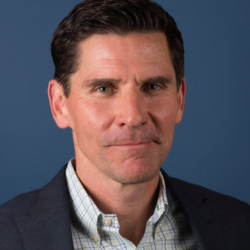
Will Swaim: America’s 250th and the Fight for Liberty in California
When I told a friend recently that I was sorry to hear she was getting a divorce, she replied, “You wouldn’t be sorry if you really knew my husband.” When I admitted that I knew him but not really, she followed with a painfully detailed catalog of his offenses and promised that I’d get an invite to what she calls her Unwedding Party — “Capital ‘U,’ capital ‘P,’ ” she added.
The Declaration of Independence (capital D, capital I) is a little like that. It includes a list of grievances aimed directly at George III — because “a decent respect to the opinions of mankind requires that they should declare the causes which impel them to the separation” — and the promise of a kind of party to follow.
As kids, most of us learned the DI’s stirring opening words (self-evident truths, all men equal, unalienable rights bestowed by a capital-C Creator). But it was only as an adult that I actually read through the grievances. Among my favorite is the one in which the signers protest that George III “has erected a multitude of New Offices and sent hither swarms of Officers to harass our people and eat out their substance.”
The words conjure for me the locust outbreak of the 1870s. At its peak in 1875, during what we now call the Albert Swarm, upwards of 12.5 trillion locusts — weighing an estimated 27.5 million tons — darkened the skies for days across Kansas, Nebraska, Colorado, Minnesota, Missouri, Dakota Territory and Texas. Working their machine-like, monstrous mandibles through wheat, corn, vegetables, and fruit trees, they also chewed the leather from harnesses and tool handles. They munched the wool off living sheep and devoured laundry hung out to dry.
That was a hundred years after the signing but I have no doubt that the signers saw in George III’s “Officers” something like those voracious critters. And today, 250 years post-DI, Californians can relate. We labor beneath some 200 state agencies, each granted the authority to send hither locust-like regulators to harass the people and eat our substance — our food, our work tools, our wealth. So far the interpreters of the Constitution — our state and federal courts — have given us only marginal relief.
California’s Long Train of Abuses and Usurpations
To take just one example, the courts have left in place California’s Public Employee Relations Board, the agency charged with adjudicating all matters involving the 2 million unionized state- and local-government employees in California. Each of PERB’s board members is an administrative judge; each was appointed by Governor Gavin Newsom; and each has been a leader of (or a lawyer for) a government union or has represented a labor-adjacent interest group.
They do not wear those white horsehair wigs favored by English judges; as a body, they ought to wear papier-mâché kangaroo masks. It’s no surprise PERB’s judges regularly rule in favor of government unions, faithfully rendering decisions that expand their power (the unions’) over California’s government at the expense of the people of California.
For instance, in the aftermath of Hamas’s October 7, 2023, horrifying attack on Israel, PERB voted twice to back striking unionized teaching assistants — despite the fact that their walkout, as University of California officials told the PERB judges, not only violated the union’s no-strike contract but was quite clearly causing “irreparable harm” to students heading into finals and graduation. PERB said there was no evidence of such harm and accepted the union’s remarkable bank-shot legal argument: that because some union members were arrested while participating in pro-Hamas campus riots, the strike was really about the free-speech rights of government employees and could therefore continue. Thanks to PERB, entire campuses were closed. Finals were postponed or canceled altogether. The campus violence continued until a state judge ended the racket. Enraged by that decision, progressive lawyers and the media roundly denounced the judge as (the horror!) a conservative.
Similarly, state agencies have moved to crush “parent notification” policies in schools — which would require simply that parents be notified, just as they are about field trips and sporting events, if their boy (for instance) asks to use the girls’ bathroom and wants his pronouns to be “she” and “her.” Teacher unions opposed the policies, and so did the state, in the person of Attorney General Rob Bonta.
The state has lost this fight badly in federal court. But no mere federal judge can stop people who (a) claim that only President Trump flouts federal courts and who (b) believe their violations of federal law are reasonable and good and (c) (most importantly) have access to PERB. When the Rocklin Unified School District board voted in 2023 to notify parents when their children seek gender-transition advice from school employees, the local teacher union filed a complaint with PERB. In that complaint, the union alleged that the district’s adoption of the parent notification policy violated the union’s collective bargaining rights. Never mind that, under California law, collective bargaining is designed to settle wages, hours of employment, and related conditions of employment. This is California, and in California, state law can be ignored whenever it becomes inconvenient to the government: PERB summarily affirmed the union’s position.
The multitude of regulators sent hither to harass our people and eat out their substance is evident everywhere in California. Before being appointed, potential appointees to the board of the state’s powerful Bureau of Registered Nursing (BRN) are vetted by the California Nurses Association, the Service Employees International Union, and by state teacher unions eager to maintain their grip on nursing education. No wonder that BRN has waged a decade-long war against private nursing colleges.
Meanwhile, after decades of failing to seduce fast-food workers into their “brotherhood,” the Service Employees International Union leveraged its relationships with UCLA’s Labor Center and the California Labor Federation — the union hive mind — to persuade Sacramento lawmakers to impose a wage hike and establish a new agency, the Fast Food Council. Forcing people to accept the sovereignty of this council would seem a clear violation of the First Amendment. But in a censorship campaign that was extraordinary even for Newsom, the governor attacked critics of this constitutional overreach, and ripped reporters who documented the ensuing (and utterly predictable) layoffs, price hikes, and store closures.
Then there’s the California Public Utilities Commission (CPUC), the agency behind the radical move to ban gas stoves and internal-combustion-engine vehicles — anything that burns fossil fuels — by 2035. That same agency manages in molecular detail the utility companies that deliver electricity to California homes and businesses. The environmentalists at the PUC prize costly green-energy projects that don’t work; it has outrageously prohibited the utilities from, among other things, undergrounding power lines that remain vulnerable to high winds. When Santa Ana winds predictably snap aging power lines and spark wildfires (as one apparently did during the Los Angeles wildfires of January 2025), Governor Newsom and the regulators blame the utilities — and, of course, capitalism and climate change. Demands to punish industry then follow as surely as autumn follows summer.
In other news, CPUC has also decided that some electrons are better than others. Chief among the superior class of electrons are those that owe some part of their existence to LGBTQ people. City Journal recently revealed that CPUC has a budget of more than $600 million to advance the business prospects of LGBTQ vendors who can prove — via mind-dumbing amounts of paperwork — that they’re “officially gay.” City Journal reports that “applicants can secure certification by providing a letter from an ‘LGBT organization’ attesting to their sexual preferences; proof that a newspaper identified them as ‘LGBT’; or three letters from ‘personal contacts’ written ‘on company letterhead’ attesting to their homosexual orientation.”
California’s energy bureaucracy doesn’t stop with the CPUC. The California Air Resources Board (CARB) imposes the “clean-air” regulations and taxes that boost the cost of producing gasoline to the highest in the country. Yet Governor Newsom was quick to blame Trump’s Iran War for a record rise in U.S. fuel prices to record levels. The irony was clear: Nowhere in the U.S. did gas prices rise to the level Californians pay every day. In fact, you’d have to travel back to 2011 to find a time when Californians paid as little for gasoline as outraged Americans paid in May and early June.
And when oil companies try to produce more oil in California, they’re frustrated in that effort by another state agency, the California Geologic Energy Management Division. In 2019, Newsom fired the director of that agency because he insisted on approving legal applications to drill; when his replacement followed the same, lawful practice, Newsom fired him, too. Beheadings generally have a way of sharpening the mind: The agency’s latest director canceled all those permits and went on a climate-saving offensive — using tax dollars to actually plug wells. It was like watching the Romans sack Carthage. The result: Gasoline prices continue to rise, and Newsom has created a new agency to investigate the oil industry’s “price-gouging.”
The state Department of Fair Employment and Housing regularly sues California companies on frivolous complaints and then hires politically connected trial attorneys to pursue them. Even in progressive California courts, those lawsuits frequently fail, but not before the state and the companies have spent millions litigating them.
Meanwhile, everyone complains about the cost of California housing; it’s the highest in the nation. But the Coastal Commission won’t allow local governments to build houses — even frustrating Californians who want to repair the homes they already live in. That irony doesn’t stop the governor and progressive legislators from complaining that local governments won’t build more housing — and then suing them.
If you run a farm that your Central Valley family has owned for generations, you’ll need permission from regulators for virtually every activity. California’s Department of Food and Agriculture, the state Department of Pesticide Regulation, the Department of Water Resources, the Air Resources Board, and the Department of Fish and Wildlife will each have their say. And when the United Farm Workers union doesn’t like the results of a vote it calls in order to take control of your workers, it can count on the UFW-controlled California Agricultural Labor Relations Board to lock up the ballots and impose the UFW’s labor contract on you.
The harassing regulators that outraged our forebears are everywhere in California, and they’re smothering, totalizing. When in Loper-Bright the U.S. Supreme Court ended the presumed authority of federal agencies to interpret ambiguous laws passed by Congress, sharp-eyed California progressives immediately grasped the possibility that California could lead a counterattack from the states. UCLA environmental-law professor Julia Stein makes that case on the University of California’s Legal Planet blog, concluding that Loper “underscores the augmented role states, including California, will need to continue to play in fighting climate change.”
That sort of augmentation has national implications: Golden State regulators speak often and glowingly of their national leadership, of providing a model for other progressive state officials. In October 2022, for example, Newsom signed a pig’s trough of new laws to bolster the power of state agencies — a set of measures that (he said) represents the “most significant action on the climate crisis in California’s history and raises the bar for governments around the world.” California’s vehicle standards, for instance, are readily adopted in other states, often by legal statute. These state relationships will now become the front lines in the emerging legal battle over what’s constitutional and what is regulatory authoritarianism.
Such an “augmented” role for the state in California will be enforced by a governor who brags openly that his model for good government is Culbert Olson, California’s 29th governor, a Marxist who believed in what he called “unitary action” of government — the 150-year-old progressive dream (descended from Hegel and then Marx) of a world in which expert regulators impose upon us the most “scientific” ideas of the moment, no matter their constitutional implications, no matter that the so-called “science” may mask malignant political impulses. And then, of course, in this utopia, the struggle between Chevronistas and conservatives will melt away, Marx’s friend Friedrich Engels promised, as the “interference of the state power in social relations becomes superfluous in one sphere after another, and then ceases of itself.” Eventually, “the government of persons is replaced by the administration of things and the direction of the processes of production.”
For Californians, and all Americans by consequence, this means that the administrators’ attacks upon our rights — the government-sanctioned regulatory beatings — will continue until morale improves.
Just as my friend’s complaints about her soon-to-be ex-husband led her to divorce court, the Declaration’s list of grievances led directly to the Revolutionary War; war led to independence. We needn’t contemplate taking up arms against our neighbor. What’s called for is work and faith. Our “faith,” as I’m calling it, is a belief that is open to both religious and secular Californians. It’s the knowledge that we humans are built for freedom, an impulse so powerful that subjugation cannot last.
But freedom (to paraphrase Martin Luther King, Jr.) does not roll in on the wheels of inevitability. It requires work. If you’re a friend of the California Policy Center, you are likely already engaged in that work — work that is grounded in one of Benjamin Franklin’s greatest lines.
On September 17, 1787, 11 years after the signing of the Declaration, Franklin was leaving the Constitutional Convention in Philadelphia’s Independence Hall when a prominent local woman named Elizabeth Willing Powel asked him: “Well, Doctor, what have we got, a republic or a monarchy?” Without hesitation, Franklin famously replied, “A republic, if you can keep it.”
Brothers and sisters, fellow Californians, let’s keep it.
Will Swaim is CEO of California Policy Center and co-host with David Bahnsen of National Review’s “Radio Free California” podcast.